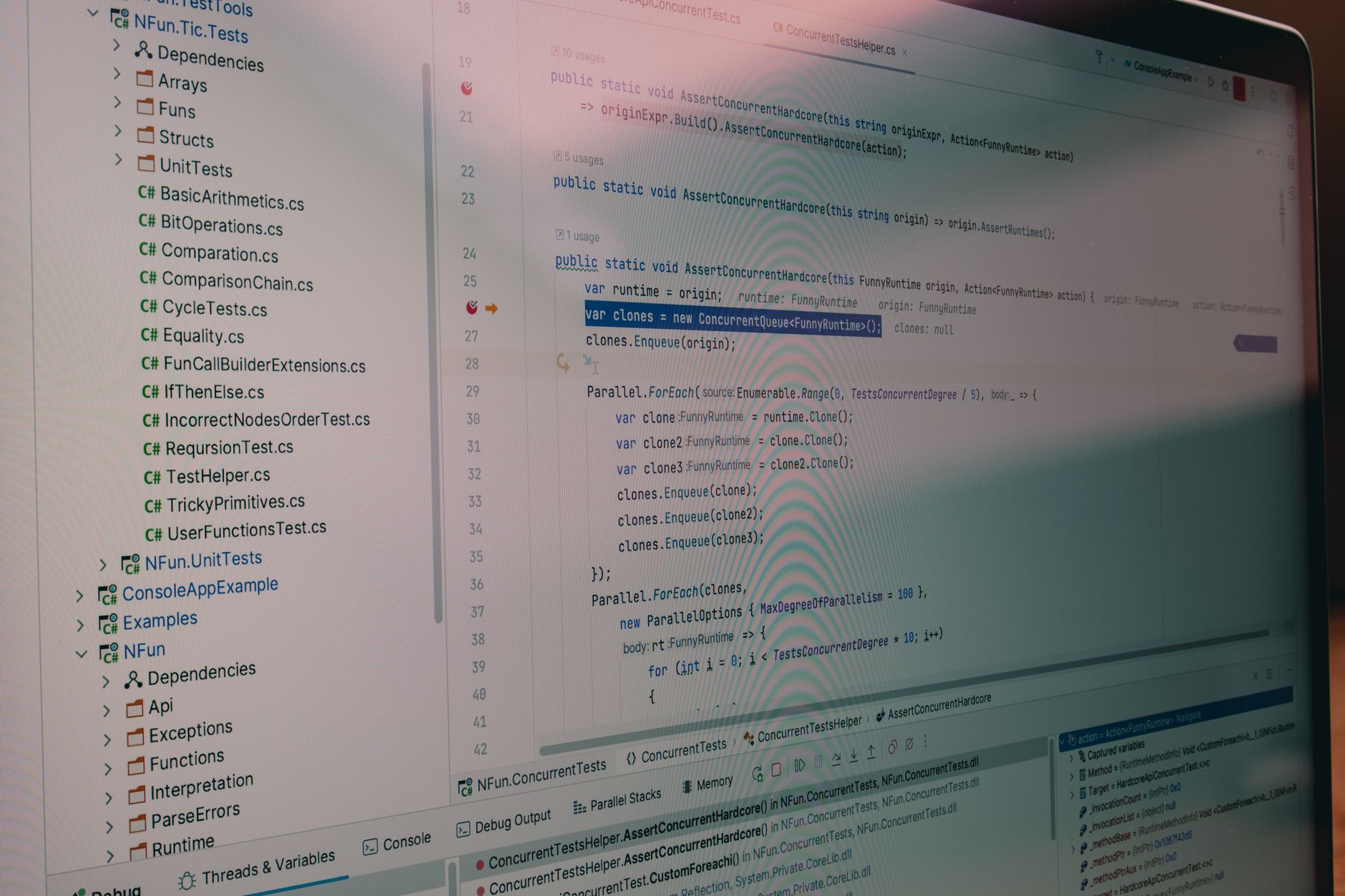
Cursor IDE Honest Review: Is It Actually Worth Switching From VS Code?
📷 Daniil Komov / PexelsCursor IDE Honest Review: Is It Actually Worth Switching From VS Code?
After 3 months with Cursor, here's what's great, what's broken, and whether it's worth leaving VS Code. Includes comparison with Copilot and pricing breakdown.
What Is Cursor?
Cursor is an AI-first code editor built on top of VS Code. It was created by Anysphere and launched publicly in 2023, and by 2026 it has become one of the most talked-about tools in the developer community. Unlike traditional editors that bolt AI features on as plugins, Cursor was designed from the ground up to weave AI into every aspect of the coding workflow.
If you have used VS Code, you will feel immediately at home. Cursor inherits the same interface, extension ecosystem, and keyboard shortcuts. The difference is that AI assistance is not an afterthought — it is the primary product.
Key Features
AI Chat (Cmd+L)
Cursor's chat panel lets you have a conversation with an AI model that has full context of your codebase. You can ask it to explain a function, find a bug, refactor a module, or generate new features. Unlike generic chatbots, it can reference your actual files.
# Example: Ask Cursor to refactor this function
def get_user_data(db, user_id):
    result = db.execute("SELECT * FROM users WHERE id = " + user_id)
    return result.fetchone()

# Cursor suggests:
def get_user_data(db: Session, user_id: int) -> Optional[User]:
    """Fetch user by ID using parameterized query."""
    return db.query(User).filter(User.id == user_id).first()
Autocomplete (Tab)
Cursor's autocomplete goes far beyond traditional IntelliSense. It predicts not just the next token but entire blocks of code. When you start writing a test, it fills in the assertions. When you write one API route, it drafts the next one in the same pattern. The model understands your project's conventions.
Composer (Cmd+I)
Composer is Cursor's multi-file editing feature. You describe a change in plain English, and Cursor drafts edits across multiple files simultaneously. Want to add authentication middleware to all API routes? Describe it and review the diffs. This is arguably the most powerful feature for large refactoring tasks.
Codebase Context (@Codebase)
Use @Codebase in the chat to let Cursor semantically search your entire project. It indexes your code and retrieves relevant chunks for context, which means you can ask "where is the payment logic?" and get accurate answers even in a large monorepo.
Terminal Integration
Cursor embeds an AI-powered terminal. You can ask it to run commands, debug errors, and even fix issues it encounters during execution. When a test fails, Cursor can read the output and propose a fix without you switching contexts.
Pricing
| Plan | Price | Features |
|---|---|---|
| Free (Hobby) | $0/month | 2,000 completions, limited AI chats |
| Pro | $20/month | Unlimited completions, 500 fast requests/day, advanced models |
| Business | $40/user/month | SSO, admin dashboard, privacy mode, centralized billing |
The free tier is genuinely useful for trying out the product. Most professional developers land on the Pro plan at $20/month, which is comparable to GitHub Copilot's pricing.
Cursor vs VS Code + GitHub Copilot vs Windsurf
| Feature | Cursor Pro | VS Code + Copilot | Windsurf |
|---|---|---|---|
| Base editor | VS Code fork | VS Code | VS Code fork |
| Multi-file edits | Yes (Composer) | Limited | Yes (Cascade) |
| Codebase indexing | Yes | Limited | Yes |
| Terminal AI | Yes | No | Yes |
| Price | $20/mo | $10/mo | $15/mo |
| Model choice | GPT-4o, Claude, etc. | GPT-4o | GPT-4o, Claude, etc. |
| Privacy mode | Business plan | Enterprise | Available |
VS Code + GitHub Copilot is the safest choice for teams already deep in the GitHub ecosystem. Copilot's integration with pull requests, code review, and GitHub Actions is unmatched. However, it lacks multi-file AI editing.
Windsurf (by Codeium) is a strong competitor. Its "Cascade" feature is Cursor's Composer by another name. Windsurf's free tier is more generous, which makes it attractive for students and hobbyists.
Cursor wins on the depth of AI integration and the breadth of model support. If you want to choose which AI model powers your assistant on a per-task basis, Cursor gives you that flexibility.
Real Workflow Tips
1. Use @Files and @Folders for Precision
Instead of letting Cursor search broadly, pin the exact files you want the AI to reference using @filename.ts. This reduces hallucinations and keeps responses focused.
2. Write a .cursorrules File
Drop a .cursorrules file in your project root to give the AI standing instructions. For example:
You are helping develop a React application using TypeScript and Tailwind CSS.
Always use functional components. Prefer named exports. Tests use Vitest.
Never use 'any' types. Follow the existing file naming conventions.
3. Iterate With Composer, Not Chat
For any change that touches more than one file, use Composer (Cmd+I) rather than Chat. Composer produces reviewable diffs you can accept or reject file by file, which keeps you in control.
4. Review Every AI Suggestion
This is not Cursor-specific advice, but it bears repeating. Cursor can generate plausible-looking code that has subtle bugs or security issues. Always read the diff before accepting. Use it as a very fast junior colleague, not an oracle.
Pros and Cons
Pros:
- Deep codebase awareness out of the box
- Multi-file editing with Composer is genuinely transformative
- Flexible model selection (you can bring your own API key)
- Familiar VS Code interface means no relearning
- Active development team with frequent updates
Cons:
- $20/month adds up, especially for hobbyists
- Can be slower than plain VS Code due to AI overhead
- Privacy concerns — code is sent to external servers (mitigated by Business plan)
- Multi-file edits sometimes require correction; AI is not infallible
- Occasional rate limiting on the Pro plan during peak hours
Who Should Use Cursor?
Use Cursor if you:
- Are a solo developer or small team building products fast
- Work in large codebases and need AI that understands context
- Want the most advanced AI coding workflow available today
- Are comfortable paying $20/month for a productivity multiplier
Stick with VS Code + Copilot if you:
- Are in a large organization with existing GitHub Enterprise agreements
- Need deep pull request and code review AI integration
- Have strict compliance requirements around code privacy
Try Windsurf if you:
- Want similar capabilities to Cursor with a more generous free tier
- Are a student or early-career developer on a budget
Final Verdict
Cursor is the best AI code editor available in 2026 for developers who want to move fast. Its combination of codebase-aware chat, multi-file Composer edits, and flexible model support creates a workflow that feels genuinely different from traditional coding. The $20/month Pro plan is well worth it for full-time developers.
That said, AI-assisted coding is a skill. The developers who get the most from Cursor are those who learn to write precise prompts, review AI output critically, and use .cursorrules to keep the AI aligned with their project standards. Treat it as a power tool, and it will multiply your productivity. Treat it as a magic box, and you will spend time debugging AI-generated bugs.
For developers building web applications, APIs, or working with large TypeScript or Python codebases, Cursor is the tool to beat in 2026. To complement your Cursor workflow, keep handy utilities like a JSON Formatter for cleaning up API responses and a Regex Tester for validating patterns before embedding them in your code.